Back in 2008, not everyone was cheering us on.
I remember being told by critics that what we were planning was
“educational malpractice”. One teacher predicted that any kid who took a
virtual class would never make it to college. The fear was that without a
physical building, the “essence” of school would just vanish. I get it, change
is difficult and generates a tremendous amount of uncertainty and stress.
They thought virtual meant an absence of relationships.
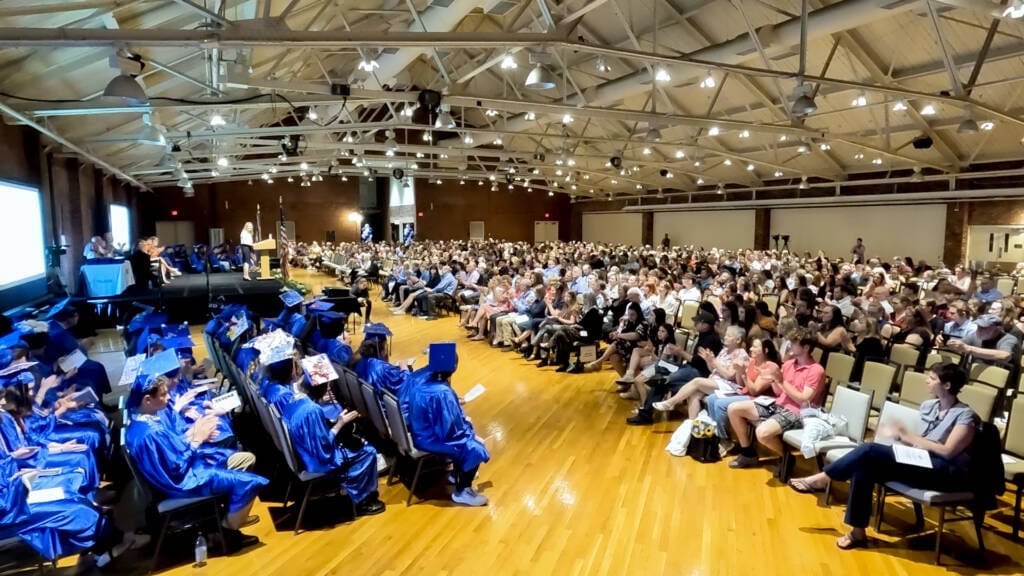
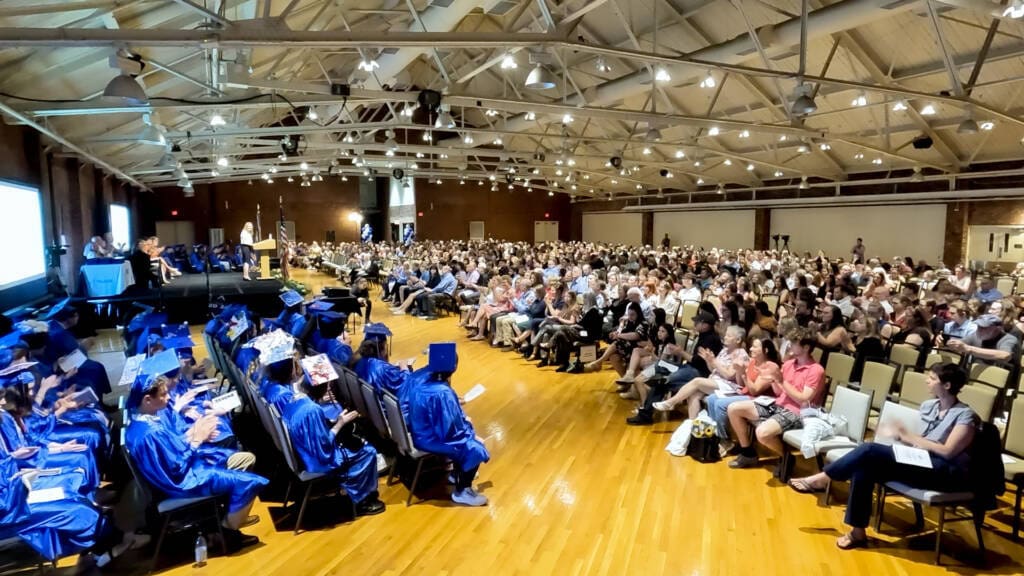
Eighteen years later, this photo from our 2024 graduation ceremony tells a
different story.
Today, the employees at the Virtual Learning Academy Charter School
(VLACS) work with over 11,000 full-time and part-time students each year,
supported by a team of 250 dedicated employees, and our graduating
classes typically number over 160 students. Our graduates enter the world
of work, the military, and start businesses. Graduates who choose to attend
college, matriculate to community colleges, state universities, private
universities, liberal arts colleges, technical and vocational schools, and Ivy
League schools.
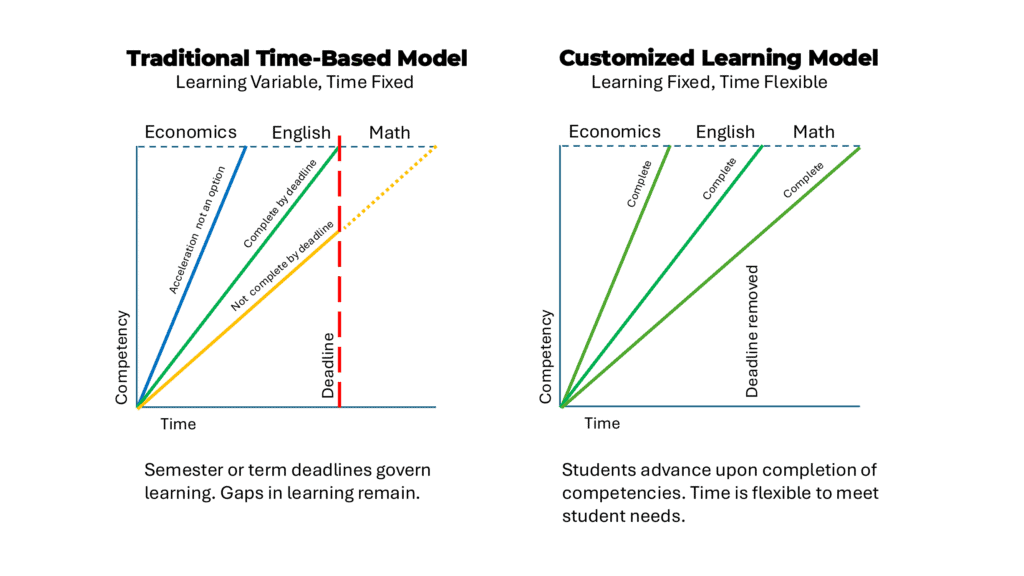
What those early critics missed is that “virtual” does not mean “not real”.
Reflections on VLACS: The People Who Built a School
I’ve had a front-row seat to something truly special for eighteen years. It’s
been a dream that became a reality only because a group of talented
professionals was willing to take a giant leap of faith.
VLACS didn’t just appear out of thin air. It started with a question that SAU
16 Superintendent, Arthur “Skip” Hanson dared to ask: Could we create a
virtual school designed to help more students succeed?
That question created the spark I needed to explore new ways of learning. It
challenged assumptions about where learning happens and how we measure
progress. Leadership often starts with the willingness to ask a better
question. I am eternally grateful to Skip for asking the question and for
helping us open the door to what education could look like if it were truly
focused on students.
One-on-One: The Heart of the Model
Those early critics couldn’t have been more wrong about the “essence” of
school. After 45 years in public education, I know that in a classroom with 30
kids, it’s hard to reach everyone. But at VLACS, the interaction is one-on-one.
It is deep, focused, and entirely about that one human being. It’s why,
almost every year at graduation, a parent will look me in the eye and say,
“You helped my child… and you may have saved a life.” That hits me right in
the heart every time. I know it’s the expertise and caring nature of 250
professionals, including our instructors, advisors, and support staff, that
made that statement possible.
Building Culture Without a Water Cooler
People often ask me how we build a “wonderful place to work” when we are
scattered across the map. We do have a physical office in Exeter where
about 30-40 of us provide administrative support, but most of our employees
work from home or other locations.
We have been intentional about building and maintaining connections. We
use video for almost everything because we want to see each other’s faces.
We have a “Chatter” channel in our chat system that acts like our virtual
family room—it’s full of photos of new grandbabies, weddings, and life
updates. If someone has a question, they post it, and a half-dozen colleagues
jump in immediately to help. And once a year, we all gather face-to-face for
our “Aspire” conference to learn, to break bread, tell jokes, and just be
together. And, most importantly, we share a mission: to build positive
relationships with students and everyone we meet. It turns out you don’t
need a physical hallway to build a tight-knit team.
A Huge Responsibility
I’ve always felt that when a family logs on to VLACS, they are offering us a
seat at their kitchen table. We are honored to be guests in their homes. We
see the dogs curious about what’ going on, the cats jumping across
keyboards, and the happy chaos of family life in the background.
I think of my optometrist. I was sitting in his chair, and he had that high-
powered air-jet instrument pointed right at my eye. He asked what I did for
work, and when I said “VLACS,” I remember thinking, I really hope he likes
us, or this is going to be a very long appointment. He beamed and told me
how much he loved what we do. It was a funny moment, but it reminded me
that we aren’t just a website; we are neighbors helping neighbors.
To Those Who Walked with Us
This is the first of three posts I’m sharing because gratitude is a big deal to
me. In a world that moves so fast, we don’t say “thank you” nearly enough.
Looking back, none of this would have happened without the steady support
of our state leaders. Every commissioner and deputy commissioner of
education, starting with Lyonel Tracey and Mary Heath, has supported our
work from day one. To all of you: thank you. I also want to thank the
Department of Education for eighteen years of ongoing support and
assistance. Without your backing, we would not be here.
I also want to express my gratitude to state legislators. In this day and age, it
is truly amazing that we have enjoyed bipartisan support throughout our
journey. To our school and business partners, career mentors, and
community members in New Hampshire and beyond: thank you.
And of course, a heartfelt thank you to the VLACS Board of Trustees. You
took a giant leap eighteen years ago when you signed the original
incorporation documents. You set in motion a journey that has changed the
lives of thousands of students.
Finally, to the staff who built this school day by day, and to the families who
trusted us with their children: THANK YOU.
I see you. I appreciate you. And I am so thankful for the journey.
—Steve