In my first post, I focused on the people, because VLACS exists the way it does because talented professionals took a chance on a dream and built a school. In this second post, I want to spend some time on a question I am asked often: how does VLACS actually work?
People hear the phrase customized learning and assume they understand it, but when you begin to unpack what that idea means, it changes some very basic assumptions about school. At VLACS, customized learning means that the student determines when, where, and how they learn based on their needs, interests, and talents.
That definition is worth sitting with for a moment, because in many schools those decisions are made largely by the system. The calendar is set. The schedule is set. The place where learning happens is largely set. The pace is often set as well. At VLACS, many of those decisions move closer to the student and the family.
This flexibility is built into the very architecture of the school. Unlike traditional systems tied to a fall or spring start, VLACS operates on a model of continuous enrollment. A student doesn’t have to wait for a new semester or a new school year to begin; they can start a course on a Tuesday in November or a Saturday in July. Once they begin, they are supported by a dual-layered team: a subject-matter instructor who facilitates the deep academic dialogue of the course, and, for full-time students, an advisor who serves as a long-term coach and navigator.
This partnership ensures that while the student is in the driver’s seat of their own schedule, they are never navigating the path alone. It also allows us to act as a vital partner to traditional schools, as many of our students move between their local classrooms and our platform in a “hybrid” way that fits their specific life.
That can mean different things for different learners. One student may do much of the work at home. Another may spend part of the week in a library or other community setting. Another may connect learning to travel, to a mentorship, or to a professional environment. Some students do their best work in a structured course. Others come alive through project-based work, through real-world experiences, or through a combination of the two.
The Industrial Model vs. Modern Reality
If you step back and look at the history of schooling, the traditional structure makes perfect sense. It was designed more than a hundred years ago during a time when communities needed an efficient way to educate large numbers of children. Students moved through grades together. Teachers worked with groups of students at the same time. Schedules were standardized, and learning took place in a single location. In many ways, that structure accomplished exactly what it was designed to do.
That model has served a great many students well, and I want to acknowledge that plainly. I do not mean this as a criticism of traditional schools. The four walls of a classroom can serve as fantastic environments for learning. But customized learning opens up the possibility that the world itself can become part of the classroom. That is one of the most important ideas in the VLACS model. It is not a slogan. It is a design commitment.
In a world that is changing this quickly, especially a world being reshaped by AI, it is not at all clear that a fixed model of schooling will continue to serve as many students as it once did. As work and industries shift, we are going to need learning environments that can flex and adapt much more quickly. That does not mean abandoning public education; it means public education must lead the way in creating models that are more responsive, more personalized, and more connected to the real world.
Starting Early: The Elementary Years
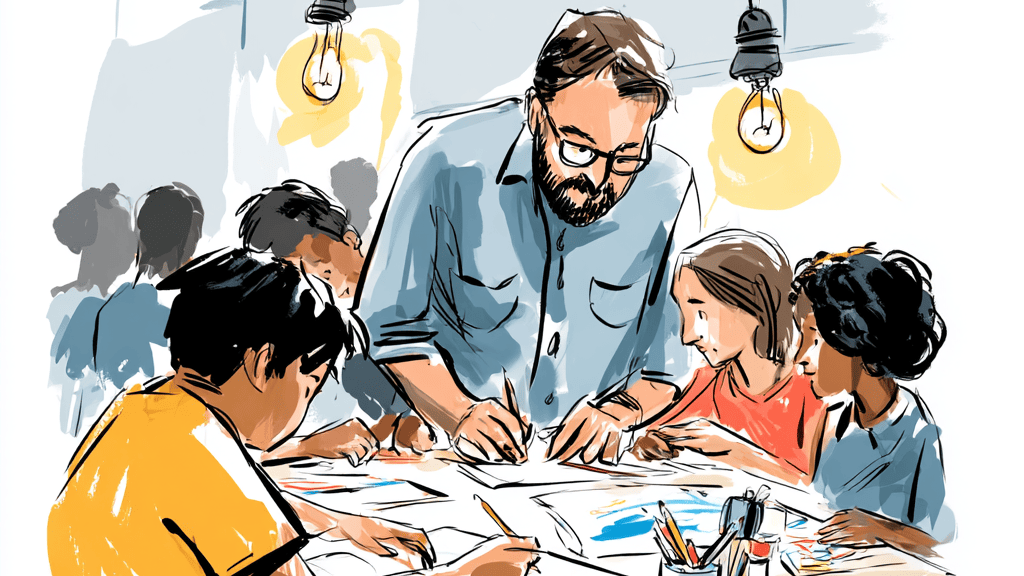
This commitment to the individual isn’t just for older students; it begins with our youngest learners in Kindergarten. For an elementary student, virtual learning doesn’t mean being tethered to a screen; it means having the freedom to learn through hands-on discovery. We see students mastering math through number lines built from clotheslines or learning science by exploring their own backyards.
At the elementary level, we maintain a human bond by assigning each student a single, dedicated instructor for all their core subjects. This allows a deep relationship to form where the teacher truly understands the child’s learning style. At this age, the parent is the partner, not the teacher. This model allows families to reclaim their time, fitting school around play, travel, or extracurricular passions while ensuring developmental milestones are met.
The Reality of the Learner
The simple reality is that students do not arrive at the schoolhouse door equally ready. They do not bring the same prior knowledge, the same skills, or the same unseen support systems. Some arrive with years of opportunity that prepared them well; others arrive carrying obstacles such as stress, uncertainty, or gaps in knowledge that several years that schools do not always see clearly enough.
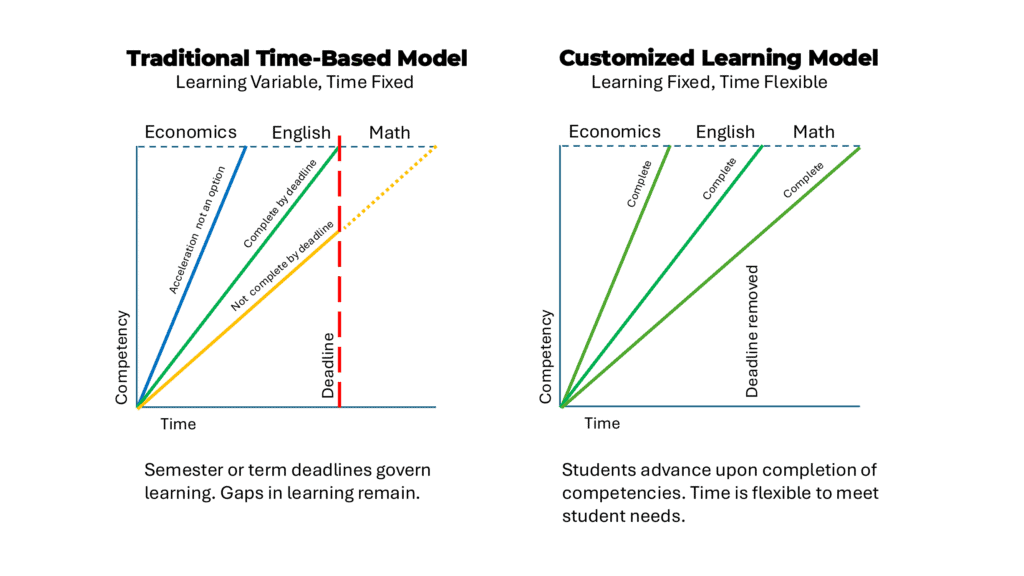
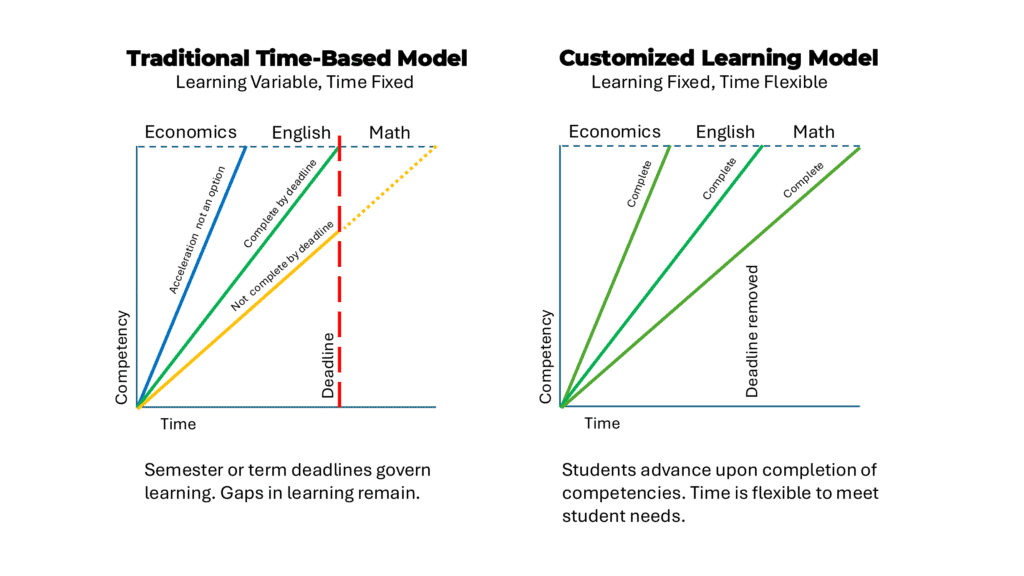
These differences matter, and they shape how students experience school. We see this in action every day. One student may move quickly through economics and need more time in math. Another may be dealing with illness, family disruption, or financial stress that slows progress for a time. These variables aren’t a reflection of capacity, but of starting points.
Benjamin Bloom made this point years ago: most students can learn at high levels when schools adjust time and support to student need. Newer research points in the same direction. In a 2023 PNAS study, researchers found:
“Whereas initial knowledge varies substantially across students, we found learning rate to be astonishingly similar across students.”
That finding shifts where we should look. It suggests that what often differs most is not student capacity, but student starting point, prior knowledge, and learning conditions.
Protecting the Learning
For me, that is the clearest argument for competency-based learning. The goal is not to lower expectations; it is to stop confusing a deadline with learning. You can put the language of personalized learning on a time-based system, but if the schedule still drives the work, the system still sorts students by time.
That is why the shift from “you fail” to “not yet” matters so much. At VLACS, everything revolves around competencies. We ask what students should know and be able to do, and then we organize learning around demonstrating that knowledge. It is not about seat time. If a student already knows the material, they should move forward. If they need more time to understand something difficult, that time should be available.
This approach also changes what school feels like. Learning becomes a dialogue rather than a series of assignments. In many courses, students participate in discussion-based assessments (DBAs) with their instructors—real conversations where students explain what they understand and how they approached the work.
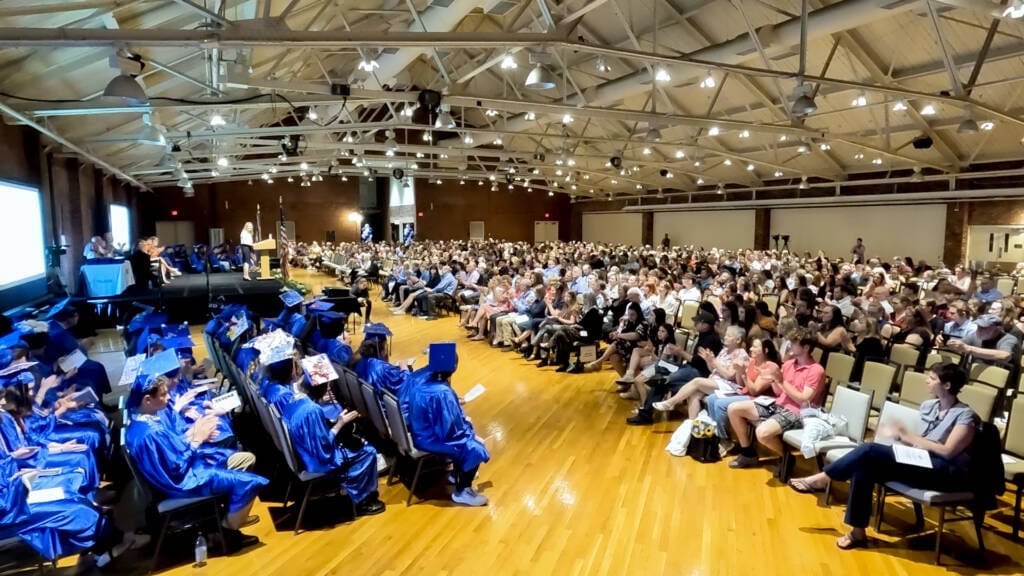
This dialogue is why the relationships in this model are so authentic. People assume that because VLACS operates online, relationships must be “thinner.” My experience is the opposite. I love seeing advisors, instructors, or VLACS staff members meet students at graduation after working together for years; they recognize each other immediately and hug like old friends. Advisory is our structural strength; advisors help students navigate a flexible experience that requires guidance to be successful.
Connecting the Future Plan to the Real World
This leads to one of our core expectations: the Future Plan. Too often, students leave high school with broad aspirations—wanting to be a doctor, a carpenter, a pilot, or an entrepreneur—but without a practical plan for the first twelve months beyond graduation.
The Future Plan is meant to interrupt that pattern. If a student wants to start a business, we shouldn’t just wish them luck; we should help them think through licensing, insurance, tools, and financing. If they want to enter a trade, we should help them find the apprenticeships, certifications, and people who can open doors.
That is why real-world learning matters so much. Students can earn credit through internships, mentorships, and work experiences connected to competencies. A student might work alongside EMTs and discover a passion for emergency medicine. Another might spend time in a restaurant or explore carpentry and filmmaking. Standing beside someone doing the work every day helps a student answer a vital question: “What does this path feel like?”
This logic also applies to honoring prior learning. Imagine a student who has played piano seriously for twelve years but needs an art credit. In a traditional structure, they might be forced to take a standard course from the beginning because that’s what the schedule dictates. At VLACS, we look at the competencies. If they have mastered six out of eight, they complete the remaining two. The prior learning counts. That is a more honest way of thinking about education.
Are You Ready?
This model is equally powerful for adult learners who return to school after years away. Many are balancing jobs and families, seeking to complete something unfinished or explore a career change. For them, a model that flexes around life’s responsibilities does more than award credits—it restores momentum and dignity.
So, how does it work? It works because we stopped asking “Is this student ready for school?” and started asking “Is this school ready for this student?”
That shift changes everything. It means we stop viewing a student’s life circumstance, their job, their family responsibilities, or their past struggles as “obstacles” to education and start seeing them as the context in which learning happens. When we protect the learning rather than the schedule, we aren’t just awarding credits. We are telling students that their time is valuable, their prior knowledge matters, and their potential isn’t tied to a date on a calendar.
After years of watching this model in action, I’ve seen that when you provide a student with a clear goal, a flexible path, and a real human relationship to guide them, they don’t just meet expectations—they often surpass them. It turns out that when a school is finally designed to fit the person, the person thrives.
In my final post, I will reflect on what VLACS meant to New Hampshire during some of its most challenging moments, and why I remain hopeful about the future of the school and the students it serves.